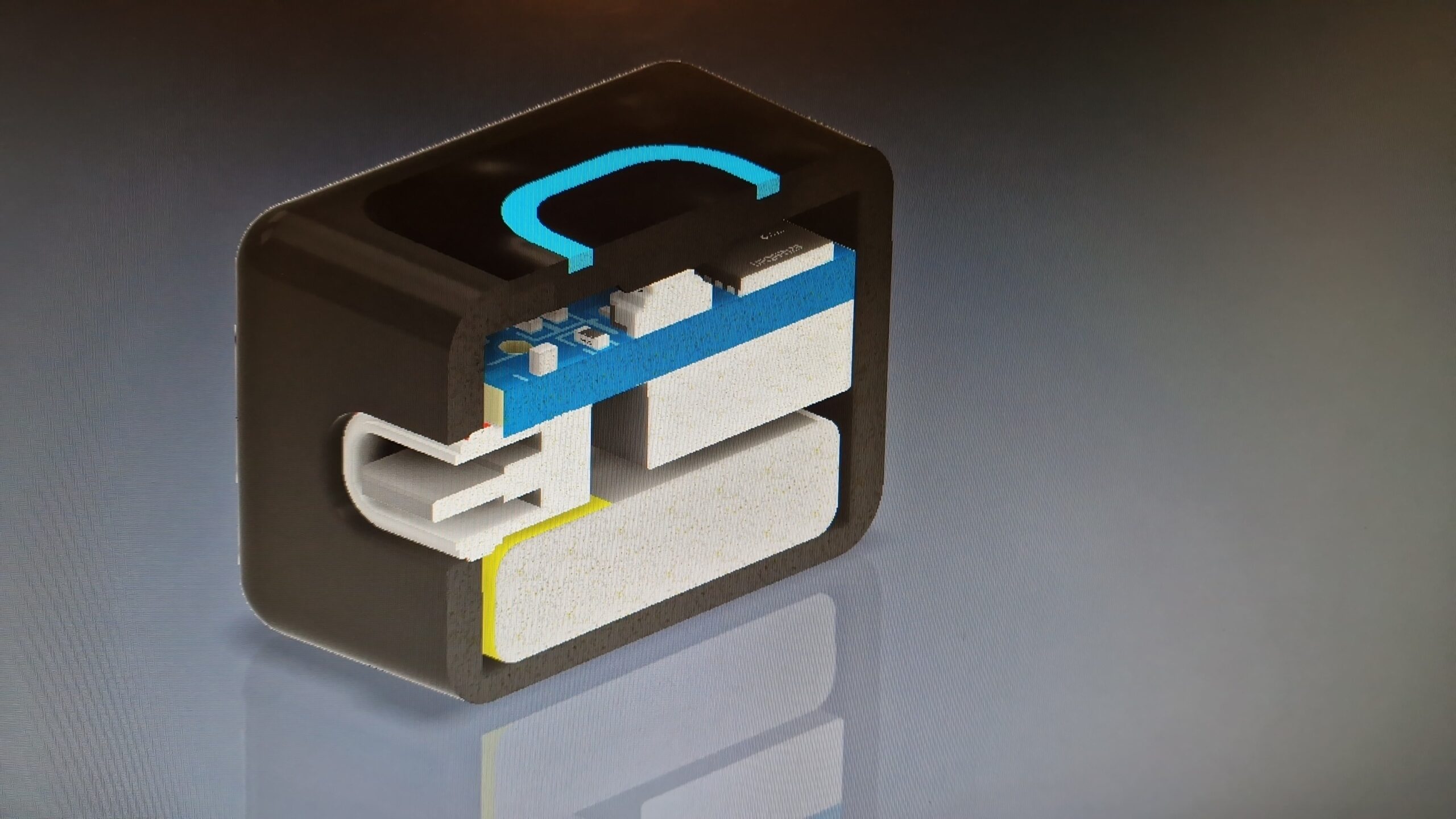
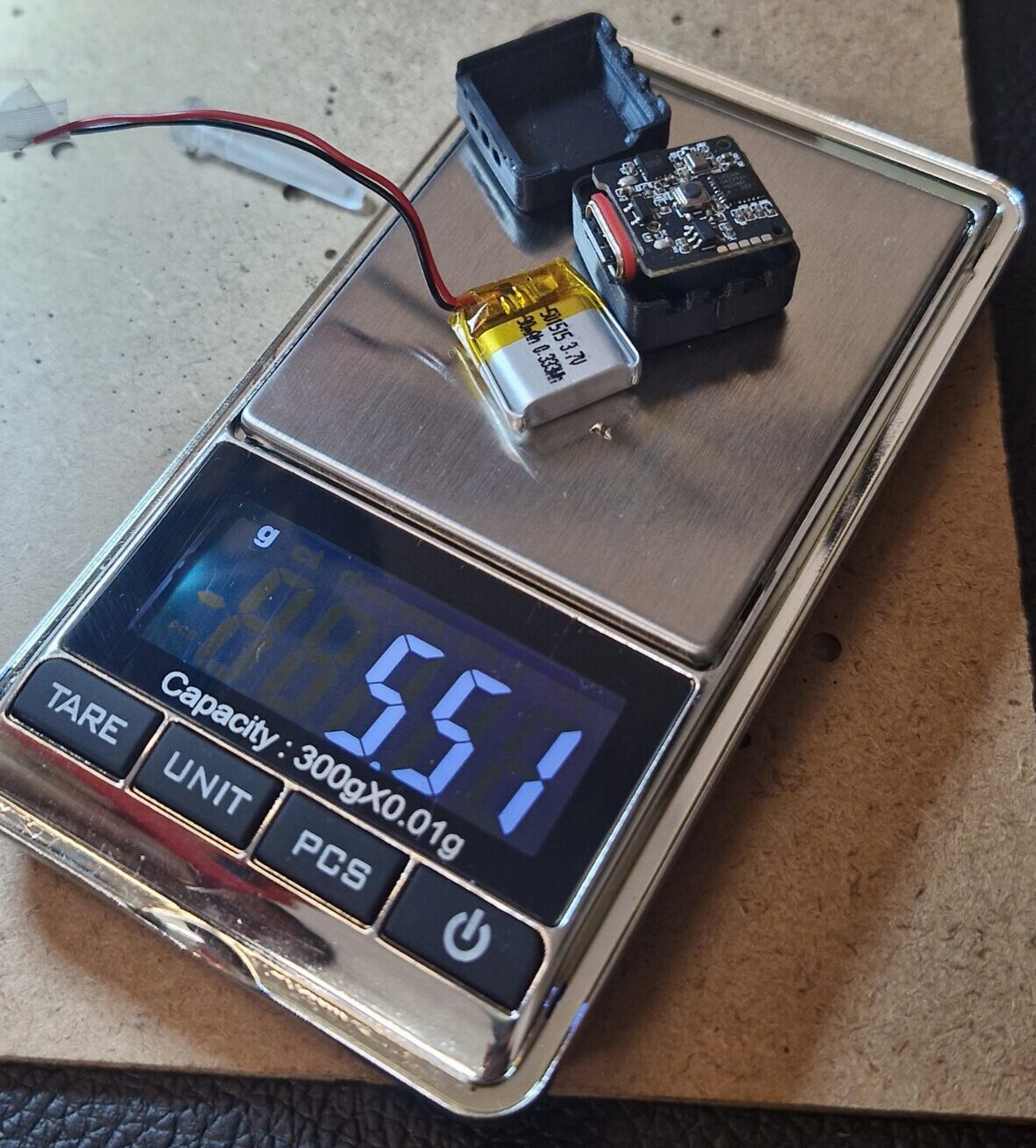
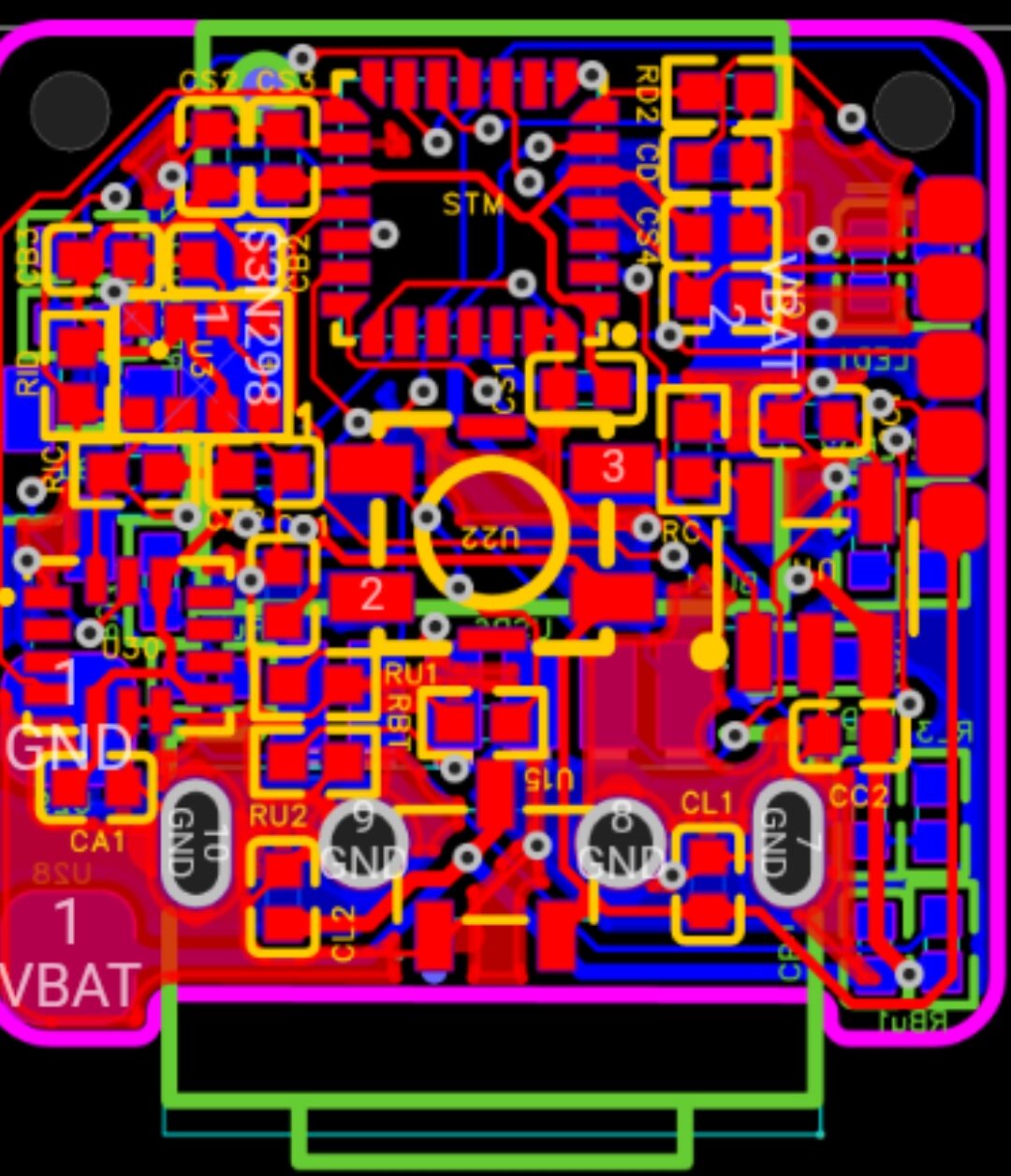
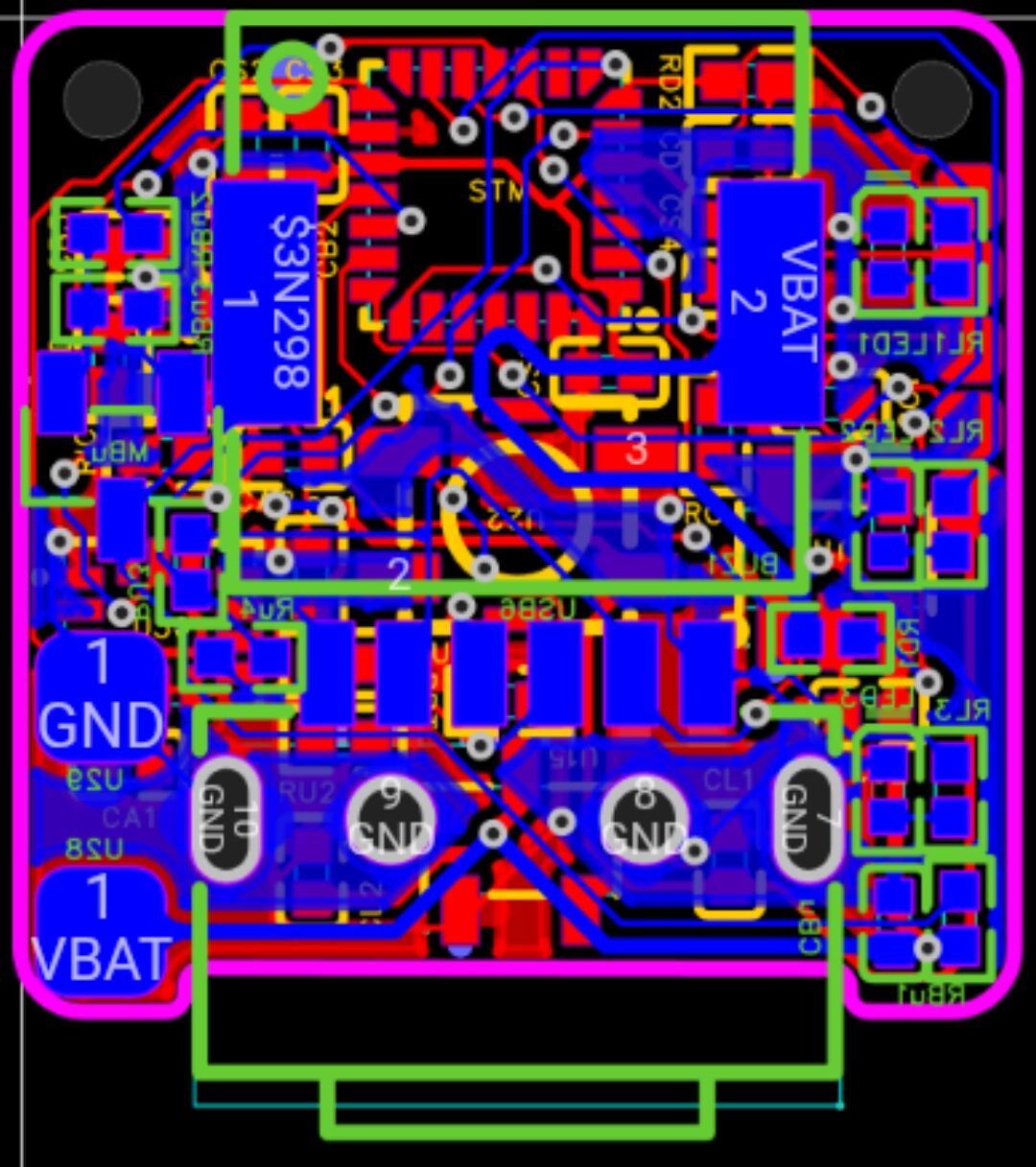
Six years after my first variometer, I wanted to find out how small a complete variometer can get. The result is a custom PCB with an STM32 microcontroller, a tiny single-cell LiPo and a 3D-printed enclosure – all together it weighs just 5.51 g.
- Custom PCB – densely packed, double-sided layout around an STM32
- USB-C connector on the board
- 3.7 V LiPo cell stacked below the PCB
- 3D-printed case designed around the electronics (see the CAD cross-section)
Firmware
The climb rate is estimated from a barometric pressure sensor. Differentiating the raw altitude would be far too noisy, so a small Kalman filter with altitude and vertical speed as states smooths the signal without adding noticeable delay – the same idea as in the first variometer, but written to run on a small STM32 with a low power budget.
Lessons from the first version
The 2020 variometer worked, but it was large and heavy. This time I started from the size limit and chose every component accordingly: a single-cell LiPo instead of a 4500 mAh pack, a custom PCB instead of breakout boards, and a case that is printed around the stack of PCB and battery.